DR. SERGIO RULICKI
doctoral research
I have been interested in NVC since I was young. There was very little published on the subject at the time, so I followed Dr. Paul Ekman’s publications on his university webpage. This gave me an advantage I had not foreseen. For years, I followed the work of the leading scientist in the field, from his earliest discoveries onward, and in this way I incorporated his developing body of knowledge.
I also came across the work of the anthropologist David Efron, who was born in one of the Baron Hirsch agricultural settlements in Entre Ríos, Argentina. He completed his doctoral work in 1941 under Franz Boas, one of the founders of cultural anthropology at Columbia University. I even met one of Efron’s cousins, who was still living in Buenos Aires, and spoke by phone with Efron’s daughter in Canada. Dr. Ekman told me in an email that he considered Efron his real teacher in NVC—Nonverbal Communication. In his doctoral thesis, Efron established the ontology of the field. That ontology, consisting of only four classes, represents all body movements and hand gestures, and has not been surpassed, only improved by Ekman and Friesen.
When I began studying human smiling only a handful of smile categories were recognized by the scholars. The main distinction was between the Duchenne smile and smiles that were not Duchenne smiles. Smiling was a black box: smiles were lumped together in one group, with a few exceptions, such as the contempt smile, the delight-in-contempt smile, smiles that mask negative emotions, the Joker’s Smile (yes, it is a seemingly universal category), and a few others more loosely defined as social smiles. I worked on 19 categories, conducting fieldwork interviews to capture the cultural meaning of different configurations.
I began with the hypothesis that there should be a nonverbal indicator that led people in other countries to perceive Argentines, especially men, as having inflated egos. Through the study of contemporary and historical cultural representatives of Argentinian culture, I finally found that this nonverbal signal of an inflated ego was the Superiority Smile, characterized by a strong unilateral asymmetry in the upward pull of one corner of the lips. This category proved quite universal, as I found it present in many cultures and societies. It is very common in southern Italy and also in the United States, with a slightly different meaning due to specific Cultural Display Rules.
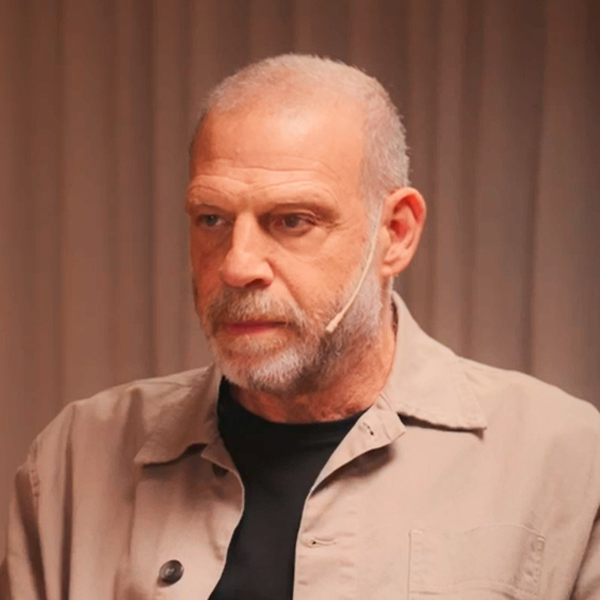
DIRECTOR ACADÉMICO DR. SERGIO RULICKI
Doctor en Ciencias de la Comunicación Social – Universidad Austral
Licenciado en Ciencias Antropológicas – UBA
Certificación Expert Level – Paul Ekman Group
contacto
ENVIAR MENSAJE COMPLETANDO EL SIGUIENTE FORMULARIO
*Campos obligatorios